

20 K-Dramas That Korean History Teachers Actually Recommend
Did you know that some of the most-watched K-dramas in South Korea are literally assigned as homework? Okay, maybe not assigned assigned — but Korean history teachers have been quietly championing certain historical K-dramas for years because they bring the past to life in ways that no textbook ever could. If you’ve ever finished a sageuk and thought, “wait, was that real?” — you’re not alone. I’ve been down that rabbit hole at 3am more times than I’d like to admit.
The best historical K-dramas don’t just entertain — they make you feel history. The court intrigue, the class struggles, the impossible love stories set against real dynasties and real wars. Whether you’re a lifelong K-drama fan or you just finished your first episode and you’re already canceling weekend plans, this list of 20 Korean dramas recommended by history teachers is going to absolutely ruin your sleep schedule. You’ve been warned.
Why Historical K-Dramas Are a Legitimate Way to Learn Korean History
Here’s the thing — I used to think sageuk dramas were just for people who liked pretty costumes and slow-burn romance (guilty on both counts). But honestly, the more I watched, the more I realized how deeply these shows are rooted in actual history. Korean drama writers and production teams do serious research. Set designers consult with historians. Costume departments recreate Joseon-era fabrics. Some productions even hire academic advisors.
Now, are they 100% accurate? Of course not — this is still TV, and there’s always going to be some dramatic license taken for the OST-worthy moments. But the political structures, the real kings and queens, the social hierarchies, the major historical events — a lot of it is surprisingly faithful. Korean history teachers have noted that students who watch historical K-dramas often come to class with better context and more curiosity. That’s a win.
Joseon Dynasty Dramas: The Crown Jewels of Historical K-Dramas
The Joseon Dynasty (1392–1897) is basically the golden age of Korean historical drama settings, and for good reason. It’s got everything: powerful kings, scheming nobles, court ladies with hidden agendas, and enough political backstabbing to make you gasp out loud at 2am. Let me tell you about the dramas set here that history teachers love most.
1. Tree with Deep Roots (2011) — MBC
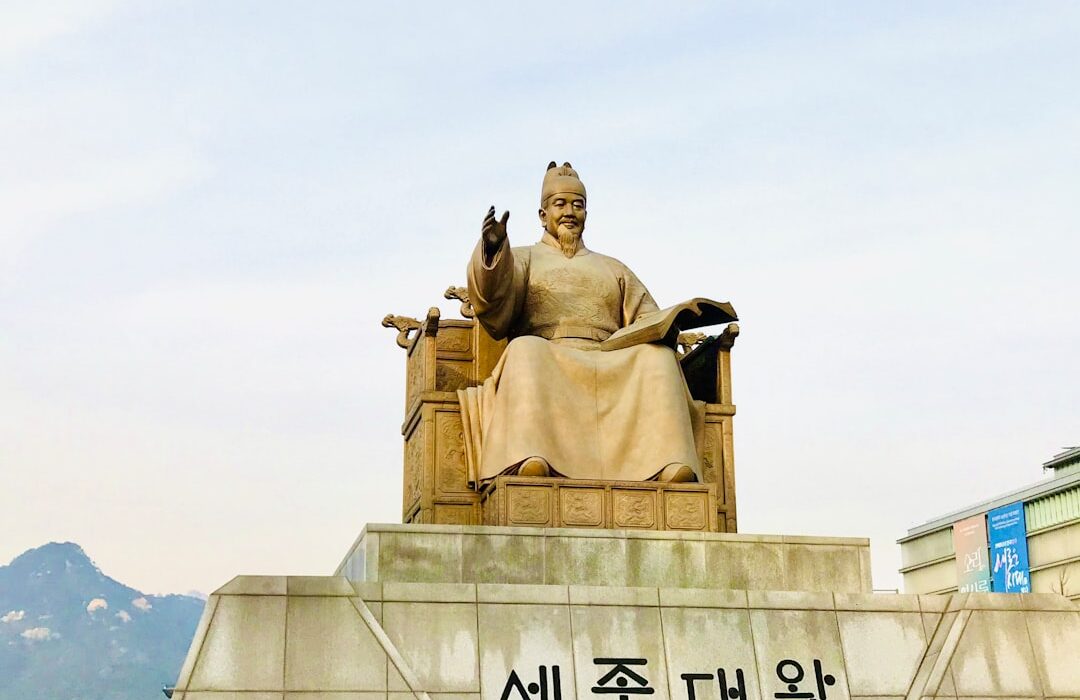
This one is criminally underrated and I will die on this hill. Set during the reign of King Sejong the Great — yes, the king who created Hangul, the Korean alphabet — this drama explores one of the most significant cultural achievements in Korean history. Han Suk-kyu plays an older King Sejong with such quiet intensity that you forget you’re watching fiction. The drama tackles literacy, power, and what it means to give a voice to the common people. History teachers love it because it contextualizes why the creation of Hangul was so politically radical and socially transformative.
2. Jewel in the Palace (Dae Jang Geum) (2003) — MBC
If you haven’t seen this one, please stop everything. This is the drama that basically put Korean historical dramas on the international map — long before “Hallyu” was even a term people used casually. Lee Young-ae plays Jang-geum, a real historical figure who became the first female royal physician during the Joseon era. The drama covers court cuisine, traditional Korean medicine, and the brutal politics faced by women who dared to be exceptional. It’s available on Netflix in some regions and on Viki globally. Historians point to it as one of the most detailed portrayals of Joseon court life ever filmed.
3. The Red Sleeve (2021) — MBC
Okay but seriously, this drama did something to me that I wasn’t prepared for. Set during the reign of King Jeongjo, The Red Sleeve tells the love story between the king and royal court lady Yi San — a real historical relationship that ended in tragedy. Lee Junho (yes, from 2PM — I know, I know, but trust the casting) and Lee Se-young deliver performances that are genuinely heartbreaking. The drama is meticulous in its portrayal of palace hierarchy and the limited agency women had within the court system. Stream it on Viki. Bring tissues. Lots of them.
Goryeo Dynasty Dramas: When Korea Had Dragons and Intrigue
The Goryeo Dynasty (918–1392) is older, slightly less dramatized, but absolutely fascinating — especially for its Buddhist influence, its relationship with the Mongol Empire, and its incredibly complex royal politics. These dramas dive into a Korea that feels almost mythical.
4. Scarlet Heart: Ryeo (Moon Lovers) (2016) — SBS
Hot take incoming: Scarlet Heart: Ryeo is one of the most emotionally devastating dramas ever made, and it deserved a better ending. I said what I said. Lee Joon-gi plays Wang So, a scarred prince in the Goryeo court, and the ensemble cast includes basically every K-drama heartthrob of that era. The drama is set during the reign of Taejo of Goryeo and portrays the brutal power struggle among royal princes with real historical grounding. Yes, it’s also a time-travel romance — but the historical backdrop is taken seriously, and the portrayal of Goryeo court politics is legitimately educational. Available on Netflix.
5. Faith (The Great Doctor) (2012) — MBC
Another time-travel entry, another era of Goryeo. Lee Min-ho plays a royal bodyguard and Lee Da-hae plays a modern plastic surgeon transported to the 14th century. What makes history teachers appreciate this one is its portrayal of the late Goryeo period — specifically the political turbulence that would eventually lead to the founding of Joseon. It’s not the most historically precise drama on this list, but it raises genuinely interesting questions about medicine, loyalty, and political change that teachers use as conversation starters.
Three Kingdoms and Ancient Korea: Going Way, Way Back
Want to know the best part about Korean history dramas? They don’t stop at Joseon. Some of the most epic productions explore the Three Kingdoms period — Goguryeo, Baekje, and Silla — which shaped the very foundation of Korean identity.
6. Kingdom of the Winds (2008) — MBC
Set in the ancient kingdom of Goguryeo, this drama follows Prince Muhyul — a figure based loosely on historical and legendary accounts. It’s epic in scale, exploring themes of legitimacy, betrayal, and warrior culture in ancient Korea. History teachers appreciate it for sparking student interest in a period that rarely gets mainstream attention. It’s harder to find on streaming platforms, but Viki has it in some regions.
7. The Great Queen Seondeok (2009) — MBC
Queen Seondeok of Silla is one of the most remarkable figures in Korean history — the first female ruler of an ancient Korean kingdom. This 62-episode drama is a commitment, but oh my goodness, is it worth it. Lee Yo-won plays the queen with fierce intelligence, and the drama covers everything from her rise to power to the political and military challenges she faced. For history teachers, it’s a goldmine for discussing gender, power, and ancient Korean statecraft. Available on Viki.
Modern History K-Dramas: The 20th Century Through Korean Eyes
Here’s where things get emotionally heavy. Dramas set in the Japanese colonial period, the Korean War, and post-war Korea carry a weight that’s hard to describe. These aren’t just dramas — they’re cultural memory.
8. Mr. Sunshine (2018) — tvN
This is the one that made me genuinely sit in silence after the finale for a full ten minutes. Set in the late Joseon period during the Japanese occupation threat, Lee Byung-hun plays Eugene Choi, a Korean-born man who becomes a US Marine officer and returns to a Korea on the brink of colonization. The drama explores the Righteous Army movement, the role of Korean independence fighters, and the tragic end of the Joseon Dynasty with stunning cinematography and one of the most heartbreaking OSTs in K-drama history. History teachers consistently recommend this for its portrayal of the 1905–1910 period. On Netflix.
9. Chicago Typewriter (2017) — tvN
Honestly, this drama doesn’t get nearly enough credit. It weaves between the 1930s Japanese colonial era and modern-day Seoul through a story about reincarnated souls, writers, and independence fighters. Yoo Ah-in and Im Soo-jung are extraordinary. The colonial-era storylines are emotionally brutal and historically grounded in a way that doesn’t feel exploitative. Available on Viki.
10. When the Camellia Blooms (2019) — KBS2
Wait — this one isn’t set in ancient history, but Korean teachers recommend it because it explores postwar Korean society and the stigma faced by single mothers in a deeply traditional community. Gong Hyo-jin is luminous in it. It’s a gentler entry point into modern Korean social history, and it won the Grand Prize (Daesang) at the KBS Drama Awards for good reason. On Netflix.
Political Intrigue Dramas: When Court Politics Gets Deadly
If you’re someone who finished Game of Thrones and thought “I wish this had better costume design and more emotionally available characters,” sageuk palace dramas are literally your destiny.
11. Joseon Attorney: A Morality (2023) — KBS2
A newer entry that’s been praised for its surprisingly accurate portrayal of the Joseon legal system and social class dynamics. Bae In-hyuk plays a commoner-turned-attorney navigating a world stacked against anyone outside the yangban noble class. History teachers love it for contextualizing how law, class, and justice functioned — or didn’t — in historical Korea.
12. Six Flying Dragons (2015) — SBS
This is the origin story of the Joseon Dynasty — literally. If you want to understand how Korea transitioned from Goryeo to Joseon, this 50-episode epic is the drama equivalent of a graduate-level course. Yoo Ah-in plays Yi Bang-won, who would become King Taejong, with absolutely terrifying charisma. The political philosophy debates between characters are genuinely based on historical Confucian versus reformist ideologies of the time. History teachers love this one. Available on Viki.
13. Deep Rooted Tree (mentioned above, but it pairs perfectly with Six Flying Dragons)
These two dramas share a connected narrative universe — Six Flying Dragons shows the founding of Joseon, and Tree with Deep Roots shows its maturation. Watch them back to back. You will not regret it, but you will cancel all your plans for approximately two weeks.
14. Rebel: Thief Who Stole the People (2017) — MBC
Based on the real story of Hong Gil-dong — Korea’s legendary Robin Hood figure — this drama is set during the reign of Yeonsangun, one of the most tyrannical kings in Joseon history. Yoon Kyun-sang plays the lead with an intensity that’s hard to shake. Teachers use it to discuss social inequality in Joseon and the historical roots of Korean folk hero mythology. On Viki.
Hidden Gem Historical K-Dramas Teachers Mention Less Often But Equally Love
15. Hwarang: The Poet Warrior Youth (2016) — KBS2
Set during the Silla Kingdom, this drama explores the Hwarang — an elite group of young male warriors who played a significant role in unifying the Three Kingdoms. The cast includes Park Seo-joon, Park Hyung-sik, and even BTS’s V (Kim Taehyung) in one of his first acting roles. History teachers appreciate its exploration of the Hwarang institution even if the drama leans more romantic than strictly historical. On Netflix.
16. The Crowned Clown (2019) — tvN
Yeo Jin-goo plays a dual role as both a paranoid king and a street clown who looks exactly like him. The drama is based on a play inspired by Mark Twain’s The Prince and the Pauper, but it’s deeply embedded in the Joseon political context of royal power and popular suffering. Gorgeously filmed, deeply moving, and a fascinating lens into questions of legitimacy and governance. On Viki.
17. My Country: The New Age (2019) — JTBC
A brutal, unflinching drama set at the transition between Goryeo and Joseon — one of the most politically violent periods in Korean history. Jang Hyuk and Yang Se-jong play childhood friends whose paths diverge catastrophically as history tears their world apart. History teachers recommend it for its honest portrayal of how ordinary people get caught in the machinery of political revolution. On Netflix.
18. Lovers of the Red Sky (2021) — MBC
Set during the Joseon era, this fantasy-historical drama stars Kim Yoo-jung as a female painter at a time when women artists were essentially erased from official record. It blends mythology with historical fact in a way that raises fascinating questions about who gets to be remembered by history. Teachers use it as a jumping-off point for discussing women’s roles in Joseon artistic life.
19. The King’s Affection (2021) — KBS2
Park Eun-bin absolutely carried this drama on her back and deserved every award. She plays a female twin who disguises herself as the crown prince after her brother’s death — a premise rooted in Joseon gender politics. The drama is available on Netflix and has become a go-to recommendation for teachers discussing gender performance and royal succession politics in historical Korea.
20. Extraordinary You (2019) — MBC
Okay, this one is a bit of a curve ball — it’s a meta fantasy set inside a manhwa (Korean comic). But hear me out: history teachers sometimes recommend it specifically because of the way it plays with historical Joseon imagery and tropes, making students think critically about how history gets represented in popular culture. It’s clever, weird, and absolutely binge-worthy. On Viki.
How to Watch These Korean History Dramas (Without Losing Your Mind)
Most of these are available on Netflix, Viki, or Disney+ depending on your region. Viki tends to have the older classics with excellent subtitles maintained by passionate fan communities. Netflix has invested heavily in K-drama licensing, so a lot of the 2018–2023 titles are there. A few older titles may require some digging on YouTube’s licensed K-drama channels or regional streaming apps.
Pro tip: if you’re watching for historical context, turn on both the subtitles and the “info cards” that some streaming platforms include — they often note when historical liberties are taken. And if a drama makes you curious about the real history, the Wikipedia rabbit holes afterward are genuinely fascinating.
Frequently Asked Questions About Historical K-Dramas
Are historical K-dramas historically accurate?
Most historical K-dramas are based on real dynasties, real monarchs, and real events — but they take creative liberties for dramatic effect. Think of them as a starting point, not a textbook. The sets, costumes, and political structures are often remarkably researched, but romance plotlines and character motivations are frequently fictionalized. Korean history teachers recommend using them to spark curiosity, then following up with actual historical reading.
What is a sageuk K-drama?
“Sageuk” (사극) simply means historical drama in Korean. It refers to any K-drama set in a historical period, most commonly the Joseon Dynasty (1392–1897) but also covering the Three Kingdoms period, Goryeo, and even the Japanese colonial era. Saeguks are known for elaborate costumes, court politics, and intense storylines. They range from serious historical epics to fantasy romances with a historical backdrop.
What is the best K-drama to start with for Korean history?
If you’re brand new to historical K-dramas, start with Mr. Sunshine (2018) on Netflix — it’s visually stunning, emotionally accessible, and covers a fascinating period of Korean history (the late Joseon/early colonial era) without requiring prior knowledge. If you want something older and more traditional, Jewel in the Palace (2003) is the classic entry point that history teachers most often recommend.
Do Korean students actually watch historical dramas in school?
Not officially as curriculum — but many Korean history teachers informally recommend specific dramas to help students connect emotionally with historical periods. Some schools have screening events or discussion sessions built around popular historical dramas. The Korean government has also occasionally supported historically significant productions as part of cultural education initiatives, particularly around anniversaries of major national events.
Which streaming platform has the best selection of historical K-dramas?
Viki (Rakuten Viki) has the deepest catalog of historical K-dramas, including many older classics from the 2000s and 2010s that Netflix doesn’t carry. Netflix has excellent recent titles and original historical productions. Disney+ has been expanding its K-drama catalog significantly. For the most comprehensive access to older sageuk dramas, Viki is your best bet — especially for titles like The Great Queen Seondeok and Six Flying Dragons.
Final Thoughts: History Has Never Been This Binge-Worthy
Look — I’ve been watching K-dramas long enough to know that the historical ones hit differently. There’s something about seeing a dynasty rise and fall, knowing that the people on screen are based on real human beings who actually lived and loved and fought and died, that makes the emotional stakes feel so much bigger. When I cried at the end of Mr. Sunshine, I wasn’t just crying for fictional characters. I was crying for a chapter of real Korean history.
These 20 Korean history dramas recommended by history teachers are a gift — not just as entertainment, but as a doorway into one of the world’s richest and most dramatic historical narratives. Whether you’re a K-drama veteran or you’re just now figuring out what a sageuk even is, there’s something on this list that’s going to grab you by the heart and not let go.
So tell me — which of these have you already seen, and which one are you adding to your watchlist first? Drop it in the comments. And if you’ve got a hidden gem historical K-drama that didn’t make this list, I genuinely want to know about it.